Guide to Investing in Buy-to-Let Property Investments in Liverpool
Property investment in Liverpool presents an enticing opportunity for investors looking to capitalise on the prestige and allure of this exclusive area of the North West.
Investing in buy-to-let properties can be a lucrative venture, and Liverpool, in particular, presents an excellent opportunity for both new and seasoned investors. This guide will help you understand why Liverpool is an attractive investment location in 2026 – 2027, what types of properties are available, and key factors like rental yields and tenant demand.
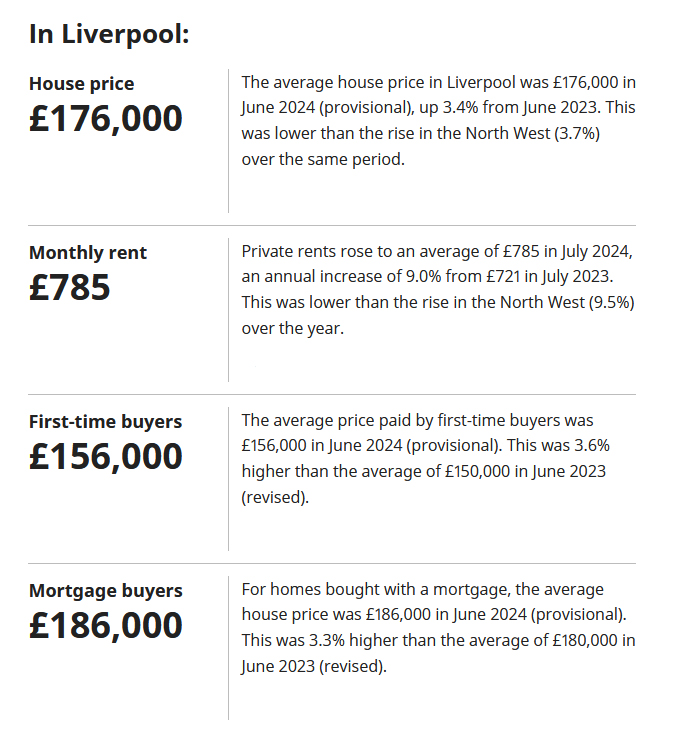
| Property Market Indicator | Average Value | Annual Growth |
|---|---|---|
| Average House Price | £188,000 | +4.7% |
| Average Monthly Rent | £916 | +5.4% |
| Average Terraced House Price | £179,000 | Not specified |
| Average Flat Price | £129,000 | Not specified |
Source:Office for National Statistics (ONS)
.
House prices: August 2026. Rental prices: September 2026.
Figures are provisional and subject to revision.
Liverpool Property Market Overview: 2026
Liverpool continues to attract attention from property investors seeking opportunities in the North West of England. With a combination of relatively affordable property prices, an established rental market and ongoing regeneration, the city offers several investment strategies for both experienced landlords and first-time buyers.
According to the Office for National Statistics, the average house price in Liverpool reached £188,000 in August 2026, representing annual growth of 4.7%. Meanwhile, average private rents increased by 5.4% to £916 per month in September 2026.
These figures highlight the importance of examining both capital growth and rental income when assessing property investment in Liverpool. However, performance varies considerably between neighbourhoods, property types and individual developments. Investors should therefore consider acquisition costs, financing, local rental demand and ongoing management expenses before making a purchase.
Liverpool Buy to Let: A Wise Investment Choice
Growing Economy: Liverpool is experiencing a significant economic resurgence, driven by investments in infrastructure, technology, and the creative sectors. The Liverpool Waters project, among others, is transforming the city’s skyline and economy, attracting businesses and creating jobs. This economic growth translates into a higher demand for rental properties as more people move to the city for work.
Regeneration Projects: The city has seen extensive regeneration efforts over the past decade, with continued investments expected in 2026.
Areas like the Baltic Triangle, Anfield, and the Knowledge Quarter are undergoing significant redevelopment, increasing property values and making them attractive locations for buy-to-let investors. Education Hub: Liverpool is home to several major universities, including the University of Liverpool and Liverpool John Moores University. The student population ensures steady demand for rental properties, particularly near the universities.
Cultural and Lifestyle Appeal: Liverpool’s rich cultural heritage, vibrant music scene, and renowned sports teams make it an appealing place to live. This appeal attracts both domestic and international tenants, ensuring diverse and consistent demand for rental properties. This cultural appeal not only boosts the local economy but also adds to the city’s desirability as a place to live and invest.
Affordability and High Yields: Compared to other major UK cities like London and Manchester, Liverpool offers relatively affordable property prices while still providing high rental yields. This affordability makes it easier for investors to enter the market and achieve strong returns.
Liverpool Buy to Let:
Overall, Liverpool’s economic growth, affordable property prices, strong rental demand, and ongoing regeneration make it a compelling location for property investment.
Liverpool is located in the northwest of England, along the eastern side of the River Mersey estuary. It is a significant port city with a rich maritime history and is part of the metropolitan county of Merseyside. Liverpool is about 220 miles (354 kilometres) northwest of London, and it is well connected to other major cities like Manchester, about 35 miles (56 kilometres) to the east.
Types of Buy-To-Let Properties Available for Sale In Liverpool
City centre apartments in Liverpool are particularly popular among young professionals and students. Areas like the Baltic Triangle, Ropewalks, and the Waterfront stand out as desirable locations, offering modern living spaces within vibrant neighbourhoods that are well-connected and full of amenities.
Terraced houses are abundant throughout Liverpool, especially in areas such as Wavertree, Anfield, and Kensington. These properties are often more affordable and can provide good investment returns, especially when converted into Houses in Multiple Occupation (HMOs). Such conversions cater to the high demand from students and young professionals, making them a lucrative option for investors.
Detached and semi-detached houses are typically located in Liverpool’s suburban areas, including Allerton, Mossley Hill, and Childwall. These properties appeal primarily to families, offering longer-term tenancies. The suburbs are known for good schools and green spaces, which attract a different tenant demographic, often seeking a more settled, family-oriented lifestyle.
Student accommodation, specifically purpose-built student accommodation (PBSA), is a rapidly growing sector in Liverpool, driven by the city’s large student population. These properties are often fully managed, providing a hassle-free investment option for those looking to capitalise on the student rental market. PBSA offers a reliable income stream with less investor involvement, making it an attractive option for those focused on the student demographic.
Rental Yields in Liverpool
Liverpool is known for offering some of the highest rental yields in the UK. On average, rental yields in the city range between 6% and 8%, with some areas achieving even higher returns. For example:
- L1 (City Centre): Yields can reach up to 8%, thanks to the high demand from professionals and students.
- L7 (Edge Hill, Kensington): This area, close to the universities, offers yields of around 7-8%, making it popular with student landlords.
- L6 (Anfield, Everton): Regeneration in these areas has led to yields of around 7-8%, with properties still relatively affordable.
Tenant Demand in Liverpool
Tenant demand in Liverpool is robust, driven by several factors:
Growing Population: Liverpool’s population is steadily growing, with a young and diverse demographic. The influx of professionals and students creates sustained demand for rental properties across various types.
Student Population: The large student population strongly drives tenant demand. Areas near universities, such as the Knowledge Quarter and parts of Kensington, see consistent demand for rental properties.
Young Professionals: Liverpool’s expanding economy attracts young professionals, particularly in sectors like digital, technology, and creative industries. This group often prefers modern apartments in the city centre or close to key business districts.
Regeneration Areas: Areas undergoing regeneration, such as Anfield and the Baltic Triangle, are becoming increasingly popular with tenants, driving up demand and rental prices.
Map Of Liverpool Region
Best Areas for Property Investment in Liverpool
In 2026, Liverpool will remain an attractive location for property investors, especially in areas with the highest property value growth. Based on recent data from the Land Registry, here are some of the top postcodes in Liverpool that have seen significant property value growth:
- L4 – Anfield West: Property prices in this area rose by an impressive 58.5% in the past year. The average property price in 2022 was around £130,000. This growth is likely driven by ongoing regeneration efforts, particularly around Anfield Stadium.
- L5 – Everton West: This area experienced a 43.3% increase in property values, with average prices reaching approximately £132,450 in 2022. Everton West is benefiting from its proximity to both the city centre and ongoing regeneration projects.
- L15 – Wavertree West: Wavertree West saw a 27.8% rise in property prices, with average values around £127,825. This area is popular with both students and young professionals due to its proximity to universities and the city centre.
- L4 – Anfield East: Anfield East also saw substantial growth, with a 24.2% increase in property values, bringing the average price to about £100,000. Like Anfield West, this area benefits from ongoing local regeneration.
- L11 – Norris Green: This postcode saw a rise of around 20%, driven by new housing developments and rising demand for affordable housing close to the city centre.
- L7 – Edge Hill/Kensington: Property prices in this area have been climbing steadily due to its proximity to the universities and city centre, making it a hot spot for student accommodation and young professionals.
- L1 – City Centre: The L1 postcode continues to perform well, with rising property values driven by its central location and the appeal of city living. This area is particularly popular for apartments catering to young professionals and students.
- L18 – Allerton: Known for its suburban charm, Allerton has seen property values rise significantly, making it one of the more expensive areas in Liverpool. Its appeal to families and professionals has driven demand.
- L17 – Aigburth: Close to Sefton Park, this area has also seen strong property value growth, attracting families and professionals seeking a mix of green space and city access.
- L6 – Kensington: Kensington’s proximity to the Knowledge Quarter and the city centre has made it a focal point for investors, especially those targeting the student rental market.
These postcodes represent some of the best opportunities for capital growth in Liverpool’s property market, driven by factors such as regeneration projects, proximity to amenities, and growing demand from both renters and buyers. We would like to thank LiverpoolWorld for the useful factual data our researchers have reviewed. Learn more about other related subjects such as the SSTC meaning or what the best way to invest £100K is in 2026 with our free guide.
Liverpool Property Investment Outlook for 2027
Investing in buy-to-let investment properties in Liverpool in 2026 – 2027 presents a compelling opportunity for investors. The city’s growing economy, extensive regeneration projects, and strong cultural appeal contribute to its attractiveness as an investment location. With a variety of property types available, from city centre apartments to suburban houses, there are options to suit different investment strategies. The high rental yields and strong tenant demand further enhance Liverpool’s appeal, making it a top choice for buy-to-let investors looking for solid returns.
As Graham Wilson, Director of Cultural Policy Research at RCCIL, I believe investing in Liverpool’s property market presents a compelling opportunity, particularly as we look toward 2027. The city’s unique combination of economic resurgence, cultural vibrancy, and strategic development initiatives makes it an attractive proposition for both domestic and international investors.
Liverpool offers a unique mix of economic potential, cultural richness, and strategic investment opportunities, making it a prime location for property investment. The city’s ability to deliver both high rental yields and strong capital-growth prospects underscores its position as a top choice for savvy investors in 2026 and beyond.
Investors considering Liverpool buy-to-let properties should focus on individual neighbourhoods and realistic financial projections rather than relying solely on historic capital growth or advertised rental yields.
Careful research into purchase prices, rental income, tenant demand and long-term ownership costs will remain essential when assessing potential investment opportunities in Liverpool.
How to Calculate Rental Yields in Liverpool
Rental yield is an important measure when comparing buy-to-let property investment opportunities in Liverpool. Gross rental yield is calculated by dividing the annual rental income by the property’s purchase price and multiplying the result by 100.
For example, a Liverpool property purchased for £150,000 and rented for £950 per month would generate £11,400 in annual rental income, representing a gross rental yield of 7.6%.
However, gross yield does not account for mortgage interest, property management fees, insurance, maintenance, void periods or other expenses. Investors should therefore calculate their expected net returns before comparing properties or making a purchasing decision.
FAQ’s On Liverpool Property Investments
Is Liverpool a good place for property investment in 2026?
Liverpool offers opportunities for buy-to-let investors because of its varied housing stock, established rental market and relatively accessible property prices. However, investment suitability depends on the specific property, purchase costs, rental demand and expected returns.
Which areas of Liverpool are best for buy-to-let investment?
Areas worth researching include Anfield, Kensington, Edge Hill, Wavertree and Liverpool city centre. Each attracts different tenant groups and offers different property types, price levels and potential risks.
What is the average rental yield in Liverpool?
Rental yields vary by postcode and property type. Investors should calculate gross yield by dividing annual rental income by the purchase price, then assess the impact of operating expenses, void periods, and financing costs.
How much money do you need to invest in Liverpool property?
The required investment depends on the purchase price, mortgage deposit, Stamp Duty Land Tax, legal fees and refurbishment costs. Investors should also maintain reserves for repairs, maintenance and periods without tenants.
Is student property investment in Liverpool worthwhile?
Liverpool’s universities support demand for student accommodation, particularly in established student neighbourhoods. Investors should nevertheless assess local competition, seasonal vacancies, licensing requirements and management costs.
Can Liverpool property prices continue to rise in 2027?
Future property prices will depend on factors including interest rates, housing supply, employment, affordability and local demand. Regeneration may support some neighbourhoods, but future capital growth is not guaranteed.
Recommended Liverpool City Guide
Contact Us for Liverpool Property Investment
If you’re considering property investment in Liverpool, our experienced team is here to assist you. Contact us today to discuss your investment objectives and explore the prestigious opportunities available in this esteemed neighbourhood.